
 using WordPress and
Selected portfolio of enterprise technology projects spanning cloud, infrastructure and business systems.
My experience covers Microsoft Azure and hybrid cloud, data centres and enterprise infrastructure, networking and unified communications, and business-critical platforms supporting corporate, manufacturing, laboratory and warehouse operations.
Across these engagements, my role has been to turn technical objectives and contracted scope into executable projects: developing integrated schedules and delivery plans, coordinating architects, engineers, vendors and business stakeholders, managing budgets, dependencies, risks and change, and driving delivery through testing, cutover, adoption, operational handover and closeout.
Azure Migration
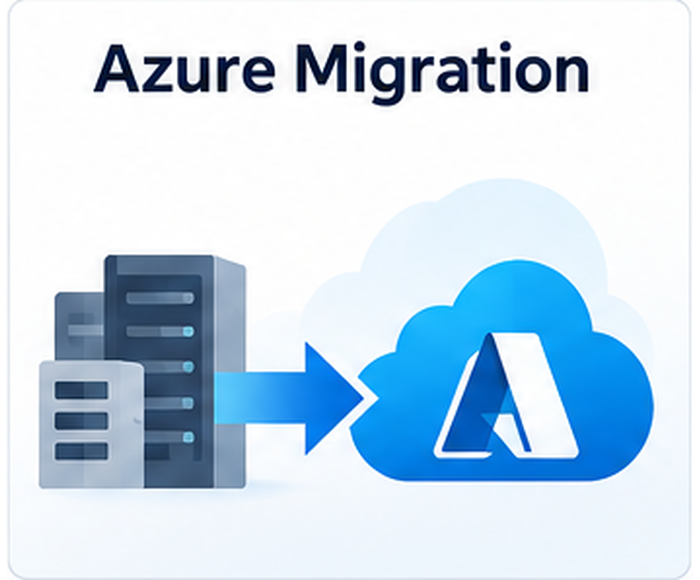
Structured migration of an on-premises server estate to Microsoft Azure. Production infrastructure migration requiring controlled wave planning and coordinated client validation.
The engagement first established an Azure Landing Zone and assessed governance, hypervisor, VM, and network readiness, then deployed Azure Migrate, replication, and the required cloud network services.
Migration was organized into two controlled waves: 36 VMs including five SQL workloads, followed by 46 VMs, with each wave sequenced through source shutdown, Azure start-up, technical validation, backup enablement, and replication cleanup.
Azure Landing Zone Creation
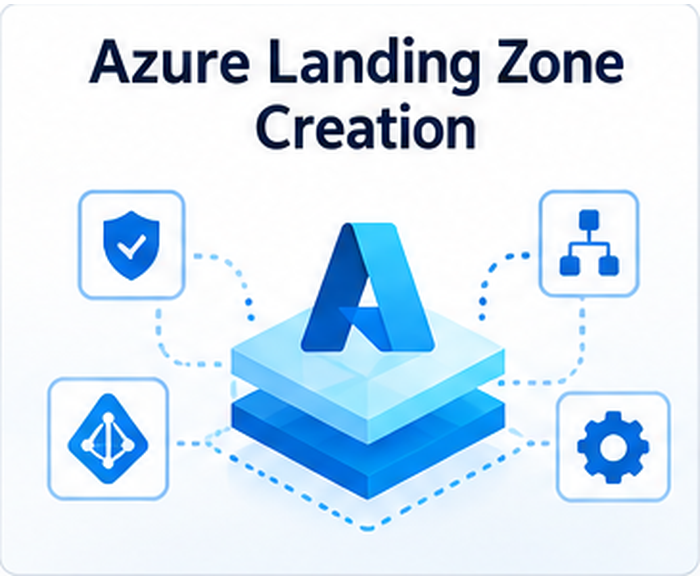
Design and implementation of an enterprise Azure Landing Zone, starting with discovery workshops and resulting in a governed cloud foundation.
Assessed regional and environment requirements, resource organization, naming/tagging, subscriptions and management groups, hybrid connectivity, network segmentation, identity, RBAC, security, and automation.
Management hierarchy and network topologies built, configured VNets, subnets, NSGs, routes, peerings and connectivity, applied policy/tags/RBAC, tested access, resolved issues.
Disaster Recovery with ASR
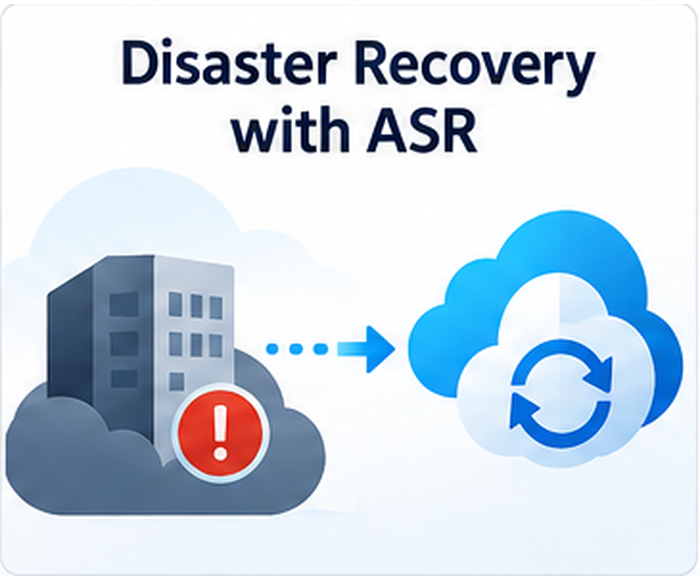
Design and implementation of an Azure Site Recovery solution to improve disaster-recovery capability.
Established ASR and infrastructure requirements, reviewed current Azure subscription and architecture, design of the recovery solution, business-continuity checklist development, and prepared both Azure and the source environment for replication. Test failover was performed.
Project required rebalancing the immediate proof-of-concept/funding objective with the client’s longer-term production security requirements.
Application and Database Modernization
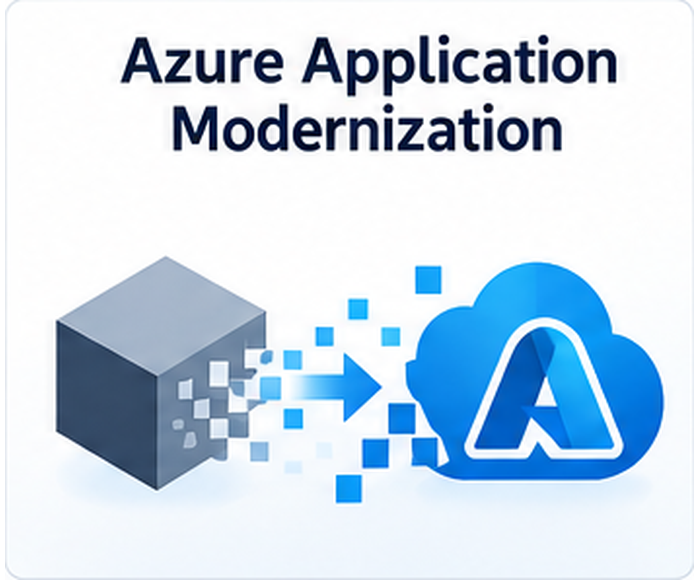
Phased modernization of an application suite from on-premises components to Azure platform services.
Assessed Azure SQL compatibility and remediation required, Windows and web services, message and storage queues, application communications, certificate/secrets handling, SQL Agent jobs, and a PDF distiller component, all to be incorporated into the target architecture and deployment strategy.
Delivery used an integrative / Agile development-first sequence with sprints, demos, and releases. Websites moved to App Services, Windows services moved to WebJobs, SOAP services moved to App Services, SQL databases moved to Azure SQL through DMA/DMS.
Environment Assessment and Migration
Assessment and pilot intended to validate migration of a development/test application environment to Azure.
Plan deployed an Azure Migrate appliance, collected environment data, engaged application owners, reviewed the on-premises estate and existing Landing Zone, assessed BCDR, monitoring, operating support, and application dependencies.
A single-application pilot was sequenced through pre-migration preparation, migration, post-migration tasks, UAT support and sign-off, followed by an assessment report and project closeout.
Data Estate Modernization
Initial phase of enterprise wide data-estate modernization.
Established naming, access, infrastructure, networking, security, source-data, warehouse-schema, application-consumption, Power BI, and Spark requirements.
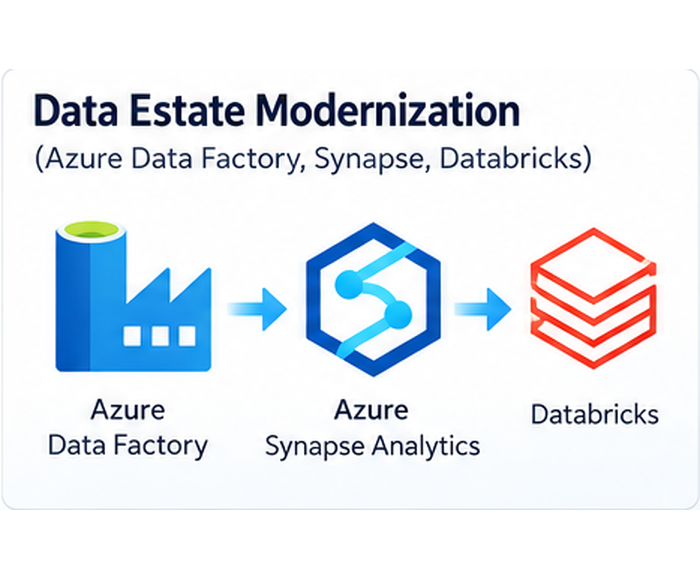
New platform deployed comprising Azure Data Factory, Data Lake Storage, VNets, Azure SQL Database, Synapse, Databricks, RBAC, and Key Vault.
Delivery moved through source ingestion and bronze/silver/gold ELT pipelines, downstream SQL/Synapse integration, application connections, and a Power BI reporting proof point.
Azure Application Modernization
Assessment and design engagement to define a credible modernization path for a proprietary medical testing application, ensuring application security, PII and confidential records management were maintained.
Project combined an Azure foundation review, application and DevOps/IaC workshops, and a Well-Architected Framework assessment across reliability, security, cost optimization, operational excellence, and performance efficiency.

Enterprise Azure Landing Zone
Large enterprise Landing Zone engagement with detailed environment analysis, design sign-off, implementation, testing, and planned operational handover.
Project addressed the management hierarchy, subscriptions, resource groups, regional and environment structure, hybrid networking, identity, security, policy, tags, RBAC, and automation.
Azure Cost Optimization Assessment
Azure cost-optimization and FinOps assessment, reviewing IaaS and PaaS resources, storage tiers, reservations, Azure Hybrid Benefit, autoscaling and shutdown opportunities.
Shared services, data resources, SKU sizing, Azure Advisor recommendations, subscription structure, budgets, and alerts were reviewed with findings and recommendations provided.
Landing Zone, Cloud Adoption Framework Review, ADDS
Azure Cloud Adoption Framework/Landing Zone review covering identity and access, governance and resource organization, network topology and connectivity, compute, and DevOps strategy.
Architects produced high-level designs for both the Azure Landing Zone and Azure AD Domain Services.
Cloud Strategy Roadmap
Cloud strategy engagement with workshops and current-state evidence resulting in a prioritized Azure technology roadmap.
Reviewed client architecture, documented findings and proposed solutions, prioritized top recommendations, created future-state and roadmap diagrams, evaluated technical complexity against business impact, and prepared a lift-and-shift Azure cost estimate using Movere and similar discovery assessment tools.
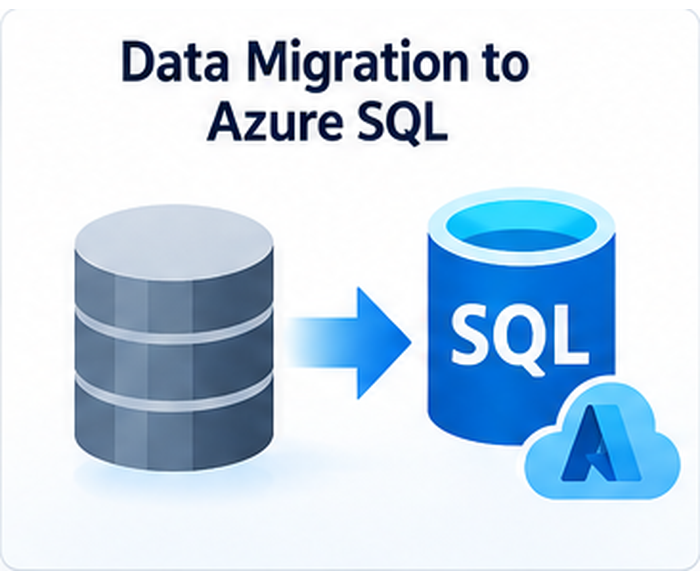
Azure Data Platform and Data Migration
Modernization of a manually intensive data process from Microsoft Access and disparate CSV, Excel, and Python components to an Azure-based platform. Included analysis of business rules, data sources, security, network, Azure infrastructure.
Delivered ADF configuration and migrated Access ODS schema to Azure SQL, converted queries to T-SQL, configured Databricks/Python execution, and built Azure Data Factory orchestration. Project progressed through infrastructure and ETL testing, production deployment validation, runbook preparation, and post-implementation feedback.
Additional pipeline parameterization and orchestration work emerged, then separated into a formal change-request/effort-true-up workstreams with their own sequenced deliverables.
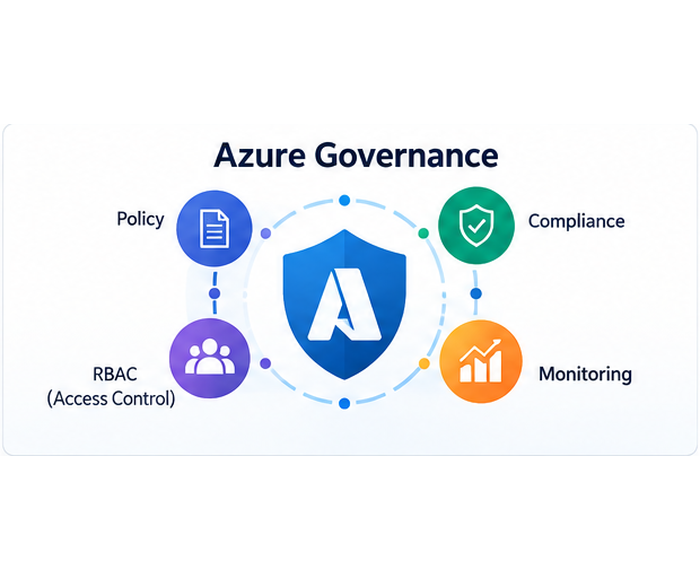
Azure Transformation: Governance, FinOps, Automation, Upskilling
Developed the delivery structure for a multi-phase Azure transformation program. Phase 1 brought together parallel assessments of the Landing Zone/Azure estate, cloud governance, FinOps maturity, DevOps/automation, and client skills. Phase 1 streams converged at a formal stage gate where findings would be reviewed, priorities agreed, proposals/change requests approved, and subsequent work scoped.
Phase 2 planned a MVP cloud operating model and governance remediation, while later provisional phases covered architecture remediation, FinOps implementation, automation and CI/CD, SCCM-related operations, training, and a Cloud Center of Excellence.
Data Centre & Enterprise Network Build, Infrastructure Migration and Business Cutover
Managed the end-to-end technology workstream for relocation of a global software company’s headquarters, forming part of an approximately $2.3M office construction and relocation program, encompassing a $400,000 IT infrastructure build and physical migration.
Approximately nine months of planning covered construction and commissioning of new server-room infrastructure: enterprise power/UPS and APC rack infrastructure, Dell Force10 core networking, Cisco network, voice and wireless infrastructure, structured fibre/copper cabling, ISP connectivity, new server and storage infrastructure, physical security systems, procurement, specialist consulting, and eventual migration of the existing production and development environment.
Established the new site as a functioning technology location while construction was still underway, allowing skeleton server/network infrastructure to be commissioned and workloads progressively migrated before the final physical move. Existing servers were inventoried and mapped into predetermined rack positions, including power, network redundancy (port and NIC), and top-of-rack connectivity requirements.
Remaining infrastructure was migrated during a tightly controlled weekend cutover using detailed hour-by-hour execution playbooks, predefined technical sequencing, specialist lift-and-shift resources, vendor escalation arrangements, staff rotations and structured application/service-owner validation.
NetApp Multi-Site Storage Refresh
Refresh and reconfiguration of enterprise NetApp storage infrastructure across Vancouver and Edmonton data centres, replacing aging FAS270 storage systems with new NetApp FAS2040 platforms while integrating existing FAS3140 infrastructure and repurposing legacy storage as disk shelves.
The engagement covered technical discovery and design validation, ONTAP upgrades, rack and power readiness, physical installation, storage and network configuration, CIFS/NFS/FCP connectivity, SnapMirror replication between sites, connectivity testing, operational documentation and knowledge transfer.
VMware vSphere Upgrade
Upgrade of an established VMware VI3 virtual infrastructure to VMware vSphere 4, modernizing the client’s virtualization platform while maintaining availability of existing production workloads.
The engagement included infrastructure and dependency assessment, migration planning, upgrade of VirtualCenter to vCenter Server 4, implementation of VMware Update Manager, upgrade of three ESX hosts, failover testing, and phased upgrades of VMware Tools and virtual hardware across test and production virtual machines.
Operational documentation and an as-built configuration guide were also delivered.
Microsoft OCS 2007 R2 Enterprise Voice “Lighthouse” Pilot
Successfully delivered a functioning Microsoft Unified Communications pilot integrating enterprise voice and IM, Exchange Unified Messaging, OCS, Mediation Server and the incumbent PBX/telephony infrastructure.
Implemented OCS alongside existing Mitel PBX, using a dedicated Microsoft OCS Mediation Server and IP voice gateway to bridge the Microsoft environment with the existing telephony infrastructure and PSTN connectivity. Solution integrated Exchange 2007 Unified Messaging for voicemail, subscriber access and automated attendant functionality.
Websense Web Security Suite Upgrade
Enterprise web-security upgrade, replacing the existing Websense 6.3 environment with Websense Web Security Suite 7.5.
New filtering platform built on VMware infrastructure and integrated with Active Directory, Citrix, Cisco firewalls and routers, remote network sites and central Internet connectivity.
Project included migration of existing security policies, controlled production cutover and development of technical and operational documentation for ongoing support.
Enterprise Core Network & Multi-Site Infrastructure Modernization
Development of a comprehensive implementation plan for the redesign and modernization of a national hotel operator’s enterprise network spanning its Vancouver co-location/data centre, corporate head office and hotel properties across Canada.
The engagement translated an approved network architecture into an executable national deployment plan covering 22 identified locations, with implementation extending across the data centre/core, WAN, MPLS carrier services, routers and switches, VLAN/IP architecture, firewalls, VPN/DMVPN, wireless, web security, structured cabling and site infrastructure.
Cisco Unified Communications Manager Modernization & Recovery
Business-critical Cisco Unified Communications Manager modernization for provincial automobile association, replacing end-of-life CallManager infrastructure and migrating the enterprise telephony platform while maintaining integrations with voicemail, SIP, contact-centre systems, voice gateways and remote locations.
Pre-migration assessment uncovered significant latent faults in the legacy production environment, including database corruption, synchronization issues and an underlying network condition resulting in business-impacting telephony outages.
Coordinated incident response involving client technical teams, senior network/voice specialists (CCIE) and Cisco TAC, established executive/client communications, controlled production changes, managed technical and commercial escalations, and suspended migration activities until the environment could be stabilized.
Cisco Survivable Remote Site Telephony (SRST)
Managed multiple Cisco Survivable Remote Site Telephony (SRST) implementations for multi-site organizations, improving voice-service resilience at remote offices by enabling local telephony continuity during loss of connectivity to centralized Cisco Unified Communications Manager infrastructure.
Led engagements from scope and planning through technical design, resource coordination, implementation, controlled cutover, testing, documentation, knowledge transfer and formal project closeout.
Coordinated specialist Cisco voice resources and client IT teams while managing schedules, risks, environmental change control and production-impact considerations.
Implementations included configuration of CUCM and remote voice gateways, deployment and validation of SRST functionality, IP-phone testing, local PSTN connectivity and business-continuity validation.
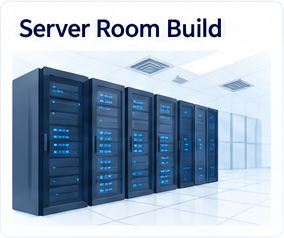
Datacenter Redesign and Refresh
Redesign and physical remediation of an organically grown production data centre supporting critical server, network and communications infrastructure. The engagement addressed physical safety, maintainability, power distribution, cabling, equipment accessibility and inadequate infrastructure documentation.
Following a detailed assessment and redesign, production equipment was systematically shut down, removed and reorganized into dedicated server and network racks, legacy/offline equipment was decommissioned, new rack-mounted power distribution was installed, ISP/network equipment was relocated, cabling was reorganized and labelled, and infrastructure was returned to service through a controlled weekend cutover.
Delivery required detailed outage planning, backup verification, equipment and dependency mapping, rollback considerations, client change control, application validation and operational handover. An unexpected Exchange failure during pre-cutover cable tracing required executive escalation and formal scope/change management while allowing the broader data-centre redesign to proceed.
Citrix Modernization (XenApp)
Enterprise Citrix modernization engagement involving the upgrade of an existing Citrix XenApp Standard environment to XenApp Platinum, together with implementation of Citrix Password Manager to introduce self-service Windows password administration and single sign-on capabilities.
The project encompassed assessment of the existing Citrix environment, licensing and infrastructure readiness, configuration of a dedicated UAT environment, Password Manager implementation across an initial portfolio of business applications, Active Directory integration, policy development, application profiling, testing, production deployment planning, documentation and knowledge transfer.
Delivery was structured around a controlled UAT-first approach, allowing authentication policies, application definitions and Password Manager functionality to be validated before deployment into the production Citrix environment.
Enterprise Backup and Recovery Solution
Modernization of an aging enterprise backup and recovery environment supporting business-critical applications and data across a central data centre and multiple remote facilities.
Replaced unreliable legacy tape infrastructure with a new enterprise tape library and introduced NetApp Open Systems SnapVault (OSSV) to automate replication of remote Windows/SQL workloads to an existing NetApp FAS storage platform at the primary data centre. SQL export automation, centralized SnapVault replication, backup testing, operational documentation and knowledge transfer were incorporated into the solution.
Delivery followed an earlier successful proof of concept and progressed through design validation, infrastructure readiness, physical installation, storage and backup configuration, remote-server deployment, replication testing and operational handover.
ERP
12-month migration from a legacy Deltek platform to NetSuite for a 700+ employee SaaS organization, supporting core client billing and financial processes across seven business units.
Program required significant legacy data cleansing, business-process analysis and NetSuite customization, delivered with an external implementation partner. The broader ERP transformation ultimately generated more than 20 related workstreams and sub-projects requiring coordinated planning, integration, testing, stakeholder management and organizational transition.
Expense Management
Implemented an enterprise expense-management platform for a geographically distributed sales organization, providing mobile receipt capture and OCR, expense submission, approval workflows and reimbursement processing.
The solution integrated with the corporate ERP and incorporated jurisdiction-specific tax handling across Canada and all 50 U.S. states. Approval logic included automated and tiered workflows based on configurable thresholds, supported by structured training and rollout activities for both travelling employees and back-office finance staff.
Human Resource Information Systems (HRIS)
Implemented a centralized HR information system for a 700+ employee organization, replacing spreadsheet-based employee records with structured HR data, reporting, dashboards and automated notifications.
Delivery required substantial legacy-data cleansing and migration, configuration of HR processes and reporting, and training of HR personnel. Given the sensitivity of employee information, privacy, confidentiality, access control and secure handling of personally identifiable information were fundamental requirements throughout the project.
Lab Information Management System (LIMS)
Laboratory Information Management System implementation, replacing legacy Excel, Access and internally developed processes to support quality testing within a regulated nutraceutical manufacturing environment.
The solution supported laboratory testing workflows, equipment and machine scheduling, maintenance activities, historical results and trend analysis, exception management, and integration with scientific equipment.
Delivery involved extensive legacy-data cleansing and migration, third-party implementation and customization, user training, and configuration of regulated documentation including Certificates of Analysis and associated quality records.
Manufacturing Execution System (MES)
Implementation of a Manufacturing Execution System supporting production scheduling and execution across a multi-site, multi-region regulated nutraceutical manufacturing environment, including blending, tablet presses and clean-room batch operations.
Delivery combined server-side implementation, workflow and user-interface customization, ERP and warehouse-system integration, and deployment of purpose-built stainless-steel production terminals. Significant change management and training were required to introduce the new workflows to production personnel operating across multiple shifts.
Applicant Tracking Systems
Managed two enterprise Applicant Tracking System implementations, supporting recruitment from public candidate submission through HR screening, workflow management and hiring administration.
Projects included migration and cleansing of legacy applicant data, configuration of externally accessible recruitment portals, security and access controls, workflow and template customization, and integration with broader HR processes. Delivery also included training HR teams on job posting, applicant queues and administrative workflows.
Helpdesk and Ticketing Systems
Led replacement of a home-grown IT support platform with Zendesk, a modern enterprise service-management solution, with the objective of improving employee self-service and reducing Tier 1 support demand.
Following a competitive vendor selection and RFP process, delivery included contract negotiation, implementation-partner coordination, customized ticket-routing decision trees, knowledge-base development and support workflows.
A phased employee communications campaign introduced the new service model and contributed to strong organizational adoption.
Loan Management System
Delivery of a custom developed employee Loan Management System integrating with enterprise business systems and national banking services. The application automated loan eligibility, calculation and amortization based on employee tenure, compensation and position, while supporting exception handling and secure applicant communications.
The AWS-hosted solution handled sensitive financial and employee information and therefore required security-by-design architecture, controlled system integrations, infrastructure and application security reviews, and protection of PII.
Approved loans could progress through integrated banking processes, with SMS providing secure and accessible applicant communications.
Warehouse Management System (WMS)
Major Warehouse Management System modernization replacing a roughly 20-year-old green-screen platform within a high-volume distribution environment. The new solution introduced modern warehouse workflows and handheld scanning for inventory, pallet positioning and movement.
Delivery involved extensive ERP integration, custom middleware and data interfaces, vendor professional services, and an internal multidisciplinary team of approximately 20 developers, testers and business specialists. With more than 3,000 affected users across multiple shifts, the program required substantial change management, enterprise communications, executive governance, testing, and carefully coordinated operational deployment.